
For decades, organisational design was an exercise in efficiency — structures that reduced friction, clarified reporting lines, and let a small group of leaders decide while the rest executed. Those models were built for an era of mass production and predictable markets. Today, that predictability is gone, and the primary constraint on an organisation is no longer efficiency. It is adaptiveness. The catalyst driving the shift is artificial intelligence.
AI is not merely a new technology to be rolled out within existing structures. It is a fundamental restructuring of how intelligence, work, and value are organised. When organisations layer that capability over legacy operating models, they quickly discover the structure has become a bottleneck. Strategy fails when the organisation is not designed to deliver it.
This paper explores why operating models have become the critical enabler of transformation, how AI is forcing a shift from static roles to fluid capabilities, and what leaders must do to design organisations that can deliver today while adapting for tomorrow.
The illusion of the "agile delivery" fix
Many executive teams recognise the need for speed and responsiveness, and respond by modernising their delivery model — adopting agile methods, new project tooling, or restructured IT teams. Yet outcomes still fall short. Modern delivery methods only succeed when supported by an appropriate operating model.
If the foundational structure — how decisions are governed, how resources are allocated, how capabilities are defined — is not aligned with strategy, no amount of delivery effort will yield results. When the operating model is failing, the symptoms rarely look structural. They look like operational friction:
- Slow decision-making. Unclear roles, responsibilities, or authority delay responses to market shifts.
- Cost inefficiencies. Redundant processes, duplicate roles, and poor resource allocation drive up cost.
- Low morale and turnover. When people feel unsupported or unclear about expectations, engagement drops.
- Inconsistent customer experience. Customers receive varying service or messaging, eroding trust.
These are not performance problems. They are design problems.
AI as the catalyst for structural shift
Most organisations are treating AI as a tool to be rolled out — added to existing ways of working to find efficiency gains. That is a mistake. AI is the start of a system shift. To understand why operating models must change, look at how AI shifts the fundamental nature of work.
From roles to capabilities
We are moving from job-holding to skill-deploying — the unit of work is shifting from the fixed role to the underlying capability. Traditional models are built around static job descriptions, but when AI handles repetitive analysis, synthesis, and pattern recognition, the human contribution changes. Value no longer comes from knowing more; it comes from deciding better — sensemaking, judgment, and learning. A model built around what people know will fail when AI can provide the answers. It must be redesigned around how people think and adapt.
From static structures to fluid teams
The traditional model separates planning from execution. The future-fluent organisation requires humans and AI to work together in integrated, fluid teams. Work forms around the problems that need solving rather than being pushed through rigid functional silos; teams surge and disband as the work demands. This needs a radically different approach to design — structures that let resources and talent move to where value is shifting, rather than locking them in static departments.
AI is the catalyst, but the operating model is the engine.
The five elements of an adaptive operating model
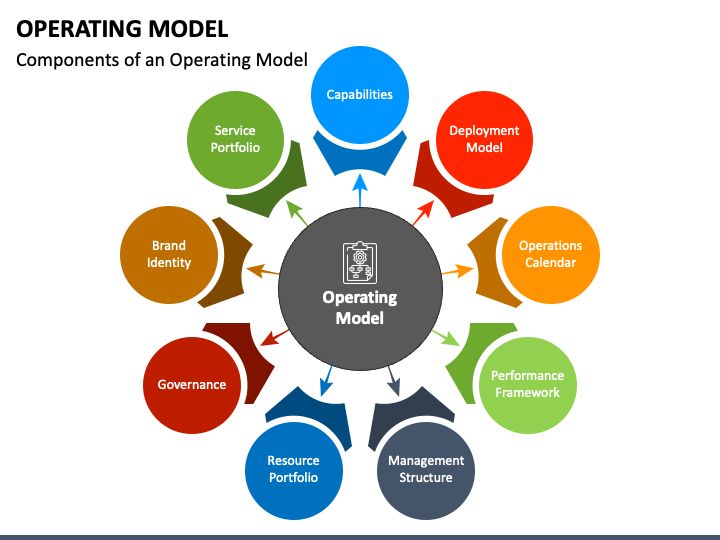
An operating model is the framework that turns strategy into coordinated day-to-day action. To build an organisation capable of holding the Dual Mandate — delivering today while designing for tomorrow — leaders must rethink five interconnected elements.
- Governance. Shift from rigid annual planning to dynamic reallocation. Build bias checks, approval steps, and escalation paths into workflows rather than policy documents — so the cadence of decisions matches the pace of the environment.
- Structure. Move from hierarchical, top-down structures to ones that enable faster decisions — designing for capability-based contribution and assembling teams around outcomes rather than reporting lines.
- Leadership & culture. The skills that got most leaders here will not carry them forward. The model must foster curiosity, sensemaking, and judgment — the human capabilities AI cannot replicate.
- Future capabilities. The skills, processes, and technologies needed to stay competitive. The World Economic Forum reports 74% of Chief People Officers rank reviewing organisational structure and job design their top priority, followed closely by supporting AI deployment. Embed capability development into the flow of real work rather than treating it as a separate HR initiative.
- Ways of working. Redesign workflows to integrate AI responsibly — determining where AI generates signals and where humans must exercise judgment, with clarity in how fluid teams collaborate.
The HR shift: from service provider to system architect
As the operating model becomes the critical enabler of transformation, the role of HR must fundamentally evolve — from supporting the organisation with administrative services to designing the conditions in which it can thrive. This means operating at a new "design layer":
- Work design. Structuring how work is organised and distributed across humans and AI.
- AI governance. Setting the principles and ethics for how AI is deployed.
- Organisational intelligence. Building the systems that let the organisation learn and adapt continuously.
HR is no longer just managing the people; it is designing the system.
Where to start
Redesigning an operating model does not require a wholesale restructure on day one. It begins with deliberate, practical moves.
- Map your decision architecture. Find where decisions slow down and where authority is unclear, then redesign those governance touchpoints to remove friction and bring data into the workflow.
- Treat AI integration as a workforce design question, not an IT project. Before deploying a tool, map the workflow — identify the repetitive steps suited to AI and preserve the judgment-heavy steps for humans.
- Run stretch conversations. Ask the executive team: "If we were building this organisation today, knowing what AI can do, how would we design it fundamentally differently?"
- Connect technology to capability. Avoid isolated pilots — tie every initiative to a measurable outcome and build the necessary capability into the rollout.
The path forward
You cannot future-proof something that will not stand still. Instead, organisations must build future fluency — the capability to respond, flex, and adapt as conditions evolve. AI is the catalyst, but the operating model is the engine. The organisations that thrive in the next decade will be those that deliberately design their structures, governance, and capabilities to meet the demands of an evolving world.